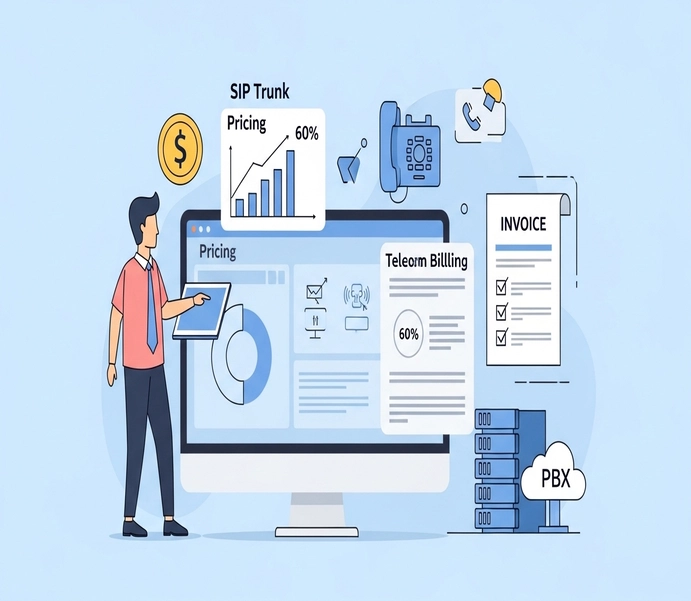
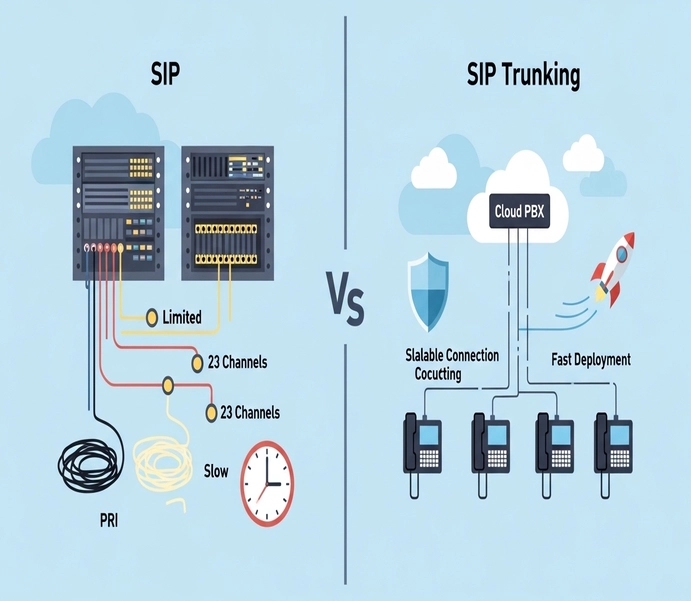
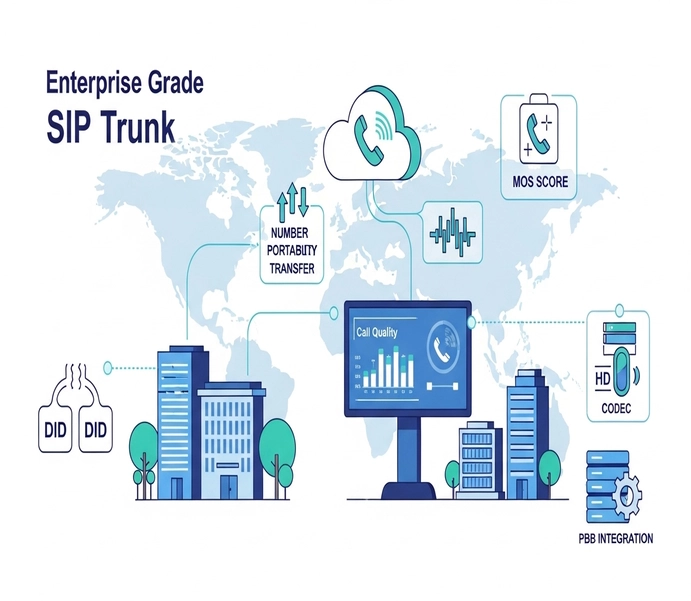
SIP trunking cost depends on concurrent channels per minute usage, domestic termination rates and whether you choose enterprise or wholesale plans. Most providers offer per channel or per minute billing models. Compared to traditional PRI lines businesses can reduce communication costs by up to 60%.

Some providers offer free SIP trunking trials or limited free test accounts. However, fully “free” SIP trunking for production use is rare as providers must cover routing infrastructure and carrier termination costs. Businesses should look for free trial options instead of completely free services.
SIP trunking and VoIP are related but not identical.
In simple terms:
VoIP is the technology; SIP trunking is the delivery method for business phone systems.
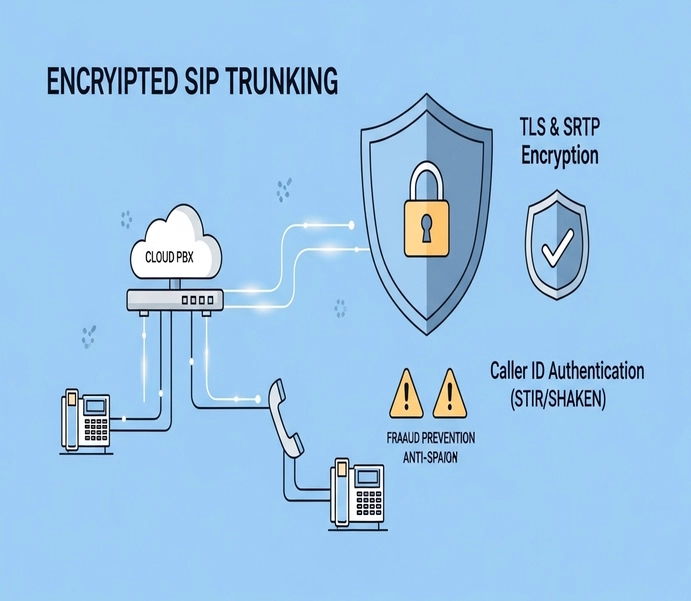
When choosing the best SIP trunk provider you should evaluate pricing transparency domestic and international termination rates TLS/SRTP encryption STIR/SHAKEN compliance scalability of concurrent calls PBX compatibility (such as Asterisk FreePBX or cloud PBX systems) and overall uptime with redundancy. The ideal provider ultimately depends on your business size, call volume and specific infrastructure requirements.
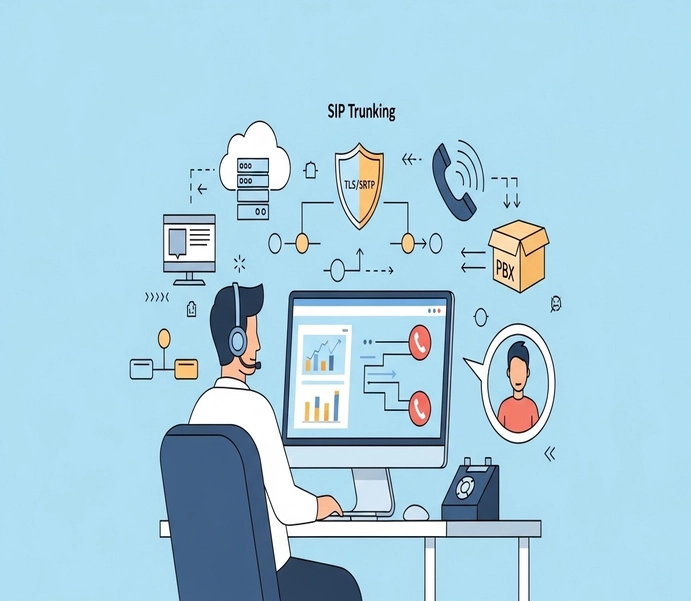
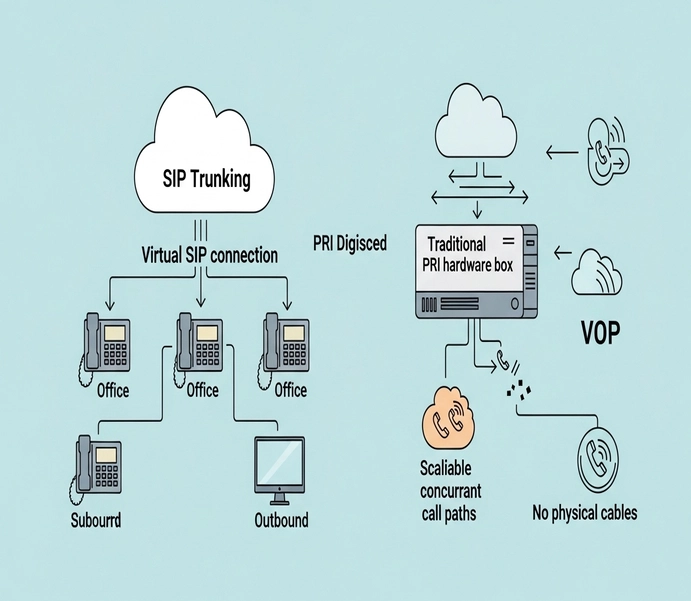
A common SIP trunking example is a call center using a cloud PBX connected to a SIP trunk provider. Instead of physical PRI lines calls are routed over the internet. For example a company using Asterisk can connect its PBX to a SIP trunk to handle 100+ concurrent inbound and outbound calls without installing additional hardware.