
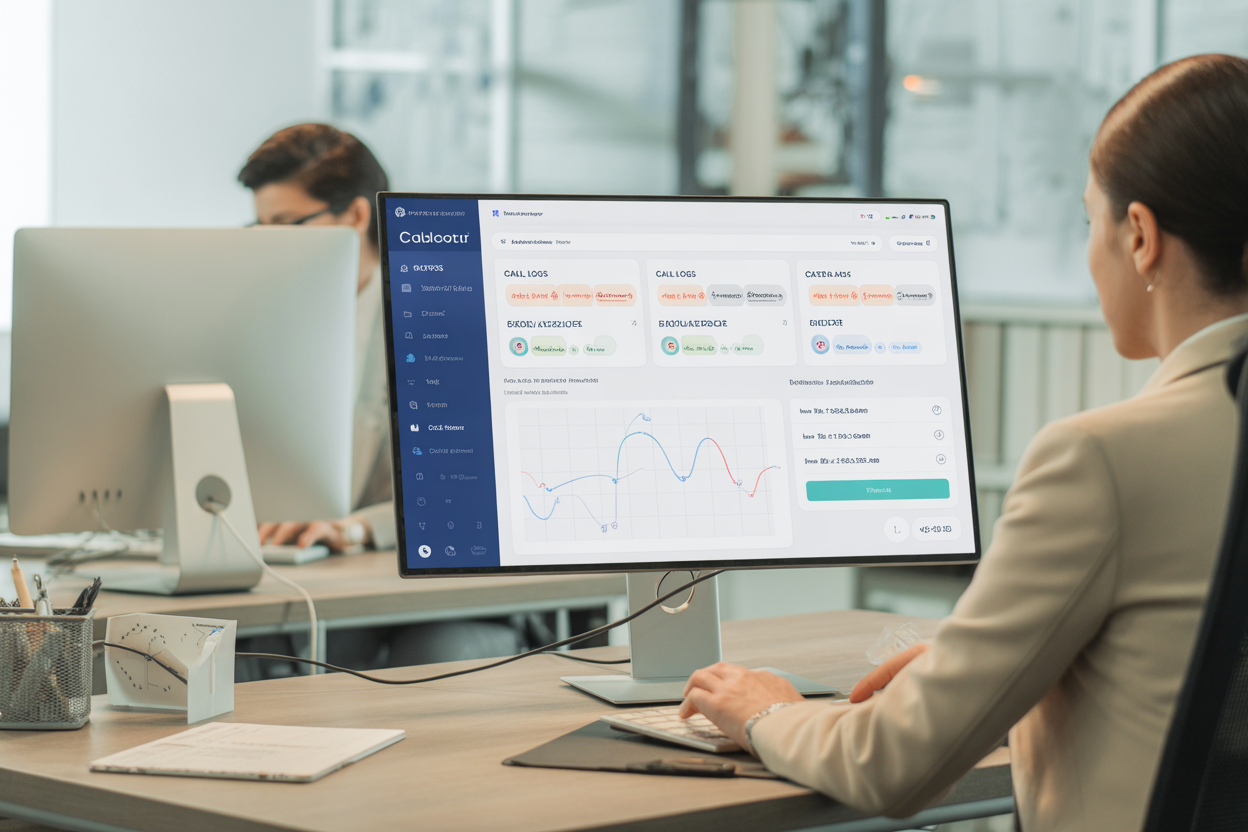
Businesses often struggle when sales teams use a hosted dialer in isolation from their customer relationship management (CRM) system. A lack of integration leads to manual data entry, missed follow-ups, and inconsistent customer records. By connecting your hosted dialer directly with your CRM, you can centralize call data, automate lead tracking, and give agents a single source of truth.
The integration process typically involves five stages:
- Choosing a compatible CRM and dialer that support open APIs or native connectors.
- Configuring authentication and permissions to ensure secure data flow.
- Mapping contact fields so customer details sync accurately between both systems.
- Automating workflows such as call logging, lead scoring, and follow-up reminders.
- Testing and monitoring performance to confirm real-time synchronization and avoid errors.
When implemented correctly, hosted dialer + CRM integration reduces agent workload, improves response time, and provides management with actionable insights. This guide will walk you through the process, highlight common challenges, and show how seamless operations enhance customer experience (CX) and sales performance.
What is CRM and Dialer?
A Customer Relationship Management (CRM) system is software that helps businesses organize, track, and manage interactions with prospects and customers. It centralizes contact information, sales opportunities, and communication history, ensuring teams have a complete view of every relationship. Modern CRMs also include automation features such as pipeline management, reporting, and customer support tools.
A dialer, by contrast, is an outbound calling automation tool used by call centers and sales teams. Instead of dialing numbers manually, the dialer automatically connects agents to leads, reducing idle time and increasing call volume. Types of dialers include predictive dialers, progressive dialers, and power dialers, each designed to optimize different calling strategies.
Why Does Dialer Integration with CRM Matter for Businesses?
Dialer integration with a CRM matters because it unifies customer data, call history, and sales workflows into one system. Instead of juggling multiple tools, agents can manage calls, log outcomes, and schedule follow-ups automatically. This improves efficiency, boosts sales productivity, and ensures that every customer interaction is personalized with context from past engagements. Businesses also gain better analytics and reporting, enabling managers to optimize campaigns and track conversions in real time.
Types of Dialer Integrations Explained
There are several types of dialer integrations that work with CRMs. Predictive dialers use algorithms to maximize agent talk time by dialing multiple numbers at once. Progressive dialers connect agents only after a call is answered, ensuring smoother workflows. Preview dialers let agents review customer details before initiating a call, making personalization easier. Each integration type has unique strengths, and the choice depends on business goals—whether speed, compliance, or personalization is the priority.
Step-by-Step Guide to Hosted Dialer + CRM Integration
Integrating a hosted dialer with your CRM typically involves five key steps. First, choose a CRM and dialer that support open APIs or native connectors. Second, establish secure authentication and permissions. Third, map customer fields so data like names, call logs, and notes sync properly. Fourth, set up automated workflows such as lead scoring, reminders, and call logging. Finally, test the system and train your team to ensure adoption and accuracy. Following these steps prevents errors and guarantees a smooth setup.
Common Challenges in CRM Dialer Integration (and How to Solve Them)
While powerful, CRM-dialer integrations often face hurdles. Data silos can appear if fields aren’t mapped correctly, but a proper sync strategy resolves this. API limitations may restrict advanced features, which middleware can often solve. Compliance issues, such as GDPR or TCPA rules, require strict data handling policies. Finally, agent adoption can be slow unless training is prioritized. By identifying these challenges early and applying best practices, businesses can ensure integration success.
Which Type of Integration Allows CRM to Work Seamlessly with Dialers and Other Business Systems?
The type of integration that enables seamless CRM-dialer connectivity depends on business needs. Native integrations (prebuilt connectors) are the easiest to implement. API-based integrations offer more flexibility for custom workflows. Middleware platforms act as bridges between systems, useful when CRMs and dialers lack direct compatibility. For long-term scalability, API and middleware integrations provide the most seamless way to connect dialers with CRMs and even other tools like helpdesks or marketing platforms.
Benefits of Hosted Dialer and CRM Integration
Hosted dialer and CRM integration delivers measurable business benefits. Productivity rises because agents spend more time talking to leads and less time on admin tasks. Customer experience improves as conversations are guided by complete histories and context. Businesses gain actionable insights through unified analytics that track calls, conversions, and agent performance. Cost savings follow because automation reduces manual errors and wasted time. Flexible integrations also allow companies to scale faster without heavy IT investment.
Real-World Examples: CRM Dialer Integrations in Action
In retail, CRM-dialer integrations help sales teams manage seasonal campaigns, track customer preferences, and upsell efficiently. In healthcare, integrations streamline appointment reminders, patient follow-ups, and compliance with medical regulations. In fintech, they enable faster loan approvals and better fraud detection through automated call verification. These examples prove that integration isn’t just theoretical—it delivers industry-specific value across sectors, improving customer engagement and operational efficiency.
Best Practices for a Smooth Hosted Dialer CRM Integration
To achieve a smooth CRM-dialer integration, follow best practices. Begin with data cleaning to remove duplicates and outdated records. Ensure that APIs are correctly configured to prevent sync errors. Train agents thoroughly so they understand both systems. Establish clear KPIs such as call-to-conversion ratio or average handling time to measure success. Finally, monitor and optimize continuously—treat integration as an evolving process, not a one-time setup.
Future of Dialer and CRM Integrations (AI & Omnichannel)
The future of CRM-dialer integrations lies in AI and omnichannel communication. AI-powered predictive dialers will optimize outreach timing, while speech analytics will provide insights into customer sentiment. Omnichannel routing will connect phone calls with email, chat, and social platforms inside the CRM, ensuring a seamless customer journey. As businesses adopt these innovations, integration will evolve from being a tool for efficiency to a core driver of personalized, data-driven engagement.
FAQs on CRM Dialer Integration
What is CRM-dialer integration? It is the connection between a CRM system and a dialer to automate calling and data management.
Why do businesses need it? It improves efficiency, personalization, and analytics.
Is integration complicated? With APIs or native connectors, setup is straightforward.
Can integration support compliance? Yes, when configured correctly, it helps businesses stay aligned with regulations like GDPR or TCPA.
Which industries benefit most? Call centers, retail, healthcare, and fintech see the strongest gains.
Why Businesses Should Prioritize CRM + Dialer Integration
CRM and dialer integration is no longer optional—it is a competitive necessity. Companies that connect these systems benefit from streamlined workflows, better data visibility, and improved customer experiences. As AI and omnichannel communication reshape the business landscape, integration ensures future readiness. By adopting best practices and overcoming challenges, businesses can unlock efficiency, scalability, and stronger customer relationships. In short, prioritizing CRM-dialer integration today prepares organizations for long-term growth and innovation.